
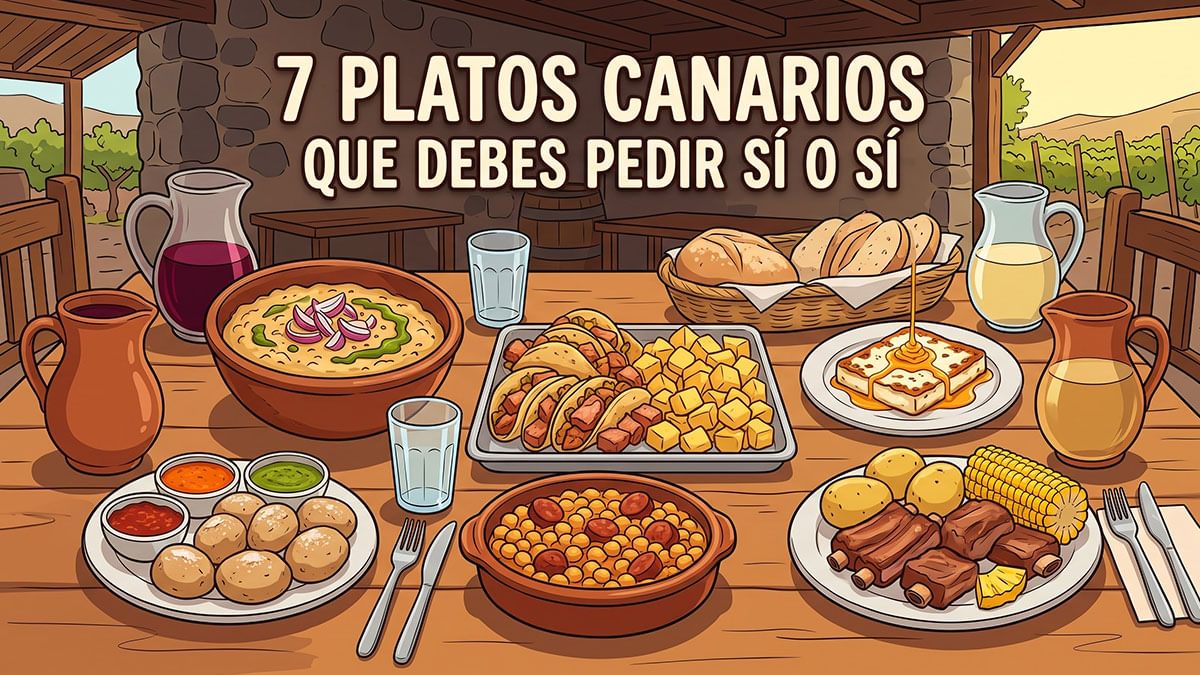
Going to a guachinche for the first time can be overwhelming. You enter a garage or courtyard, sit at a wooden table, the noise is constant, and there’s often no printed menu. The waiter (who is probably the vineyard owner or a relative) will approach and rattle off the three or four dishes they’ve prepared that day.
To help you discover the best dishes and fully enjoy Tenerife’s traditional cuisine, we’ve prepared this “Guachinche Dictionary.” Here are 7 essential dishes you’ll find in the kitchens of the island’s north, perfectly paired with local wines.
1. Escaldón de Gofio (or Gofio Escaldado)
The king of starters and the foundation of traditional Canarian cuisine. Gofio (flour made from toasted cereals, usually millet/corn or wheat) is “scalded” by pouring very hot broth, generally meat (puchero) or fish, over it, and kneaded until it achieves a thick texture, similar to a dense puree.
- How to serve: It usually comes with pieces of red onion (which you can use as a spoon), a splash of green or red mojo sauce on top, and sometimes with pieces of rib or soft cheese.
- Ideal for: Stimulating the appetite and settling the stomach before wine.
2. Fiesta Meat (Marinated Pork)
If there’s one dish that smells like a traditional Mexican pilgrimage or guachinche (a local eatery), it’s this one. These are pork tacos (made with lean meat) that are marinated for hours (or days) in a potent marinade of garlic, paprika, oregano, thyme, salt, vinegar, and white wine. Then they’re fried.
- How it is served: It is always accompanied by diced fried potatoes, which are often mixed with the meat to absorb the marinade juices.
- Ideal for: Accompanying a quarter of a young red wine.
3. Chickpeas
Note that in the Canary Islands we don’t say “garbanzos,” we say “garbanzas.” It’s a hearty and very flavorful stew. Unlike a traditional stew from mainland Spain, the broth is thicker and more concentrated.
- What it contains: In addition to the legume, it is cooked slowly with a sofrito of onion, garlic, tomato and paprika, and usually contains generous pieces of pork rib, bacon or chorizo de perro (a local sausage with a soft texture).
- Ideal for: Cold and damp days in the midlands of the north (such as in La Victoria or La Matanza).
4. Ribs with Potatoes (and Pineapple)
A dish born of pure survival that has become a delicacy. It consists of salted pork ribs (which have been previously desalted) boiled together with whole potatoes and pieces of corn on the cob.
- How to serve: It is essential to eat them dressed with cilantro mojo or green mojo on top and a drizzle of olive oil.
- Ideal for: Those looking for a dish without heavy sauces or fried foods, where the pure flavor of the product is the star.
5. Eggs to the Blast
The concept is simple, but the result is spectacular. It’s a dish born from using up leftovers and quick, homemade meals.
- What’s in it: A base of fried potatoes (diced or sliced), topped with crumbled chorizo or chistorra sausage, and crowned with fried eggs. When serving, the waiter (or you yourself) breaks the eggs and mixes everything together to create a delicious batter.
- Ideal for: Sharing in the center of the table. Kids love it.
6. Grilled Cheese with Mojo
The soft, white or smoked Canarian cheese (usually goat or mixed) is grilled until it is toasted on the outside and melted on the inside.
- How to serve: It is generously bathed in green (cilantro) or red (picón) mojo sauce, and sometimes even with a touch of palm honey or jam, creating a spectacular sweet-salty contrast.
- Ideal for: As a quick starter while waiting for the main courses.
7. Ropa Vieja
Another classic way to use up leftovers. Originally, it was made with the leftover meat and chickpeas from the Canarian stew.
- What it contains: The meat (beef, chicken or pork) is shredded and stir-fried with chickpeas, diced fried potatoes and a good sofrito of onion, pepper and tomato, sometimes with a touch of white wine.
- Ideal for: Enjoying a balanced and very tasty main course that pairs well with both white and red wine.
Bonus: Other typical dishes you absolutely must try
If you’ve already checked off the basics from the list above or want to explore flavors with more personality, keep your eyes open in case the waiter suggests any of these options:
8. Rabbit in Salmorejo
One of the undisputed kings of Tenerife’s gastronomy, with a very powerful and characteristic flavor.
- What it contains: Pieces of rabbit marinated (sometimes overnight) in a Canarian “salmorejo”: a paste made with lots of garlic, paprika, hot pepper, coarse salt, white wine, and vinegar. It is then fried and simmered in its own marinade.
- Ideal for: Those who crave intense, traditional, and slightly spicy flavors. Heads up, and be sure to have some bread ready for dipping in the sauce!
9. Goat Meat
A stew for true meat lovers. Goat has a much stronger texture and flavor than beef or pork, so it requires considerable experience in the kitchen.
- What it contains: Goat meat stewed over very low heat for hours (so that it becomes tender and loses its fierceness), accompanied by a sofrito rich in spices, thyme, bay leaf and red wine.
- Ideal for: Colder days and for those who enjoy game or flavorful meats. Pairs spectacularly with local red wine.
10. Fish Churros
Although inland guachinches are temples of meat, some offer this seafood delicacy that everyone loves.
- What it contains: Strips of white fish fillet (usually hake, pollock or grouper) wrapped in a fluffy and crispy batter that usually has a touch of saffron, garlic or parsley, fried until golden brown.
- Ideal for: A softer and crunchier snack, perfect if you’re with the family, as children love it.
The sweet touch: Canarian Quesillo
- What it is: As we explained in the “Guachinches vs. Bodegones” guide, regulations state that traditional guachinches shouldn’t serve elaborate desserts. However, in practice (and especially in bodegones), quesillo is the undisputed king. It’s a dessert visually similar to flan, but it’s made with condensed milk, giving it a denser, more porous texture and a much sweeter flavor, always drizzled with caramel sauce.
- Ideal for: Putting the finishing touch on the meal before asking for the bill.