
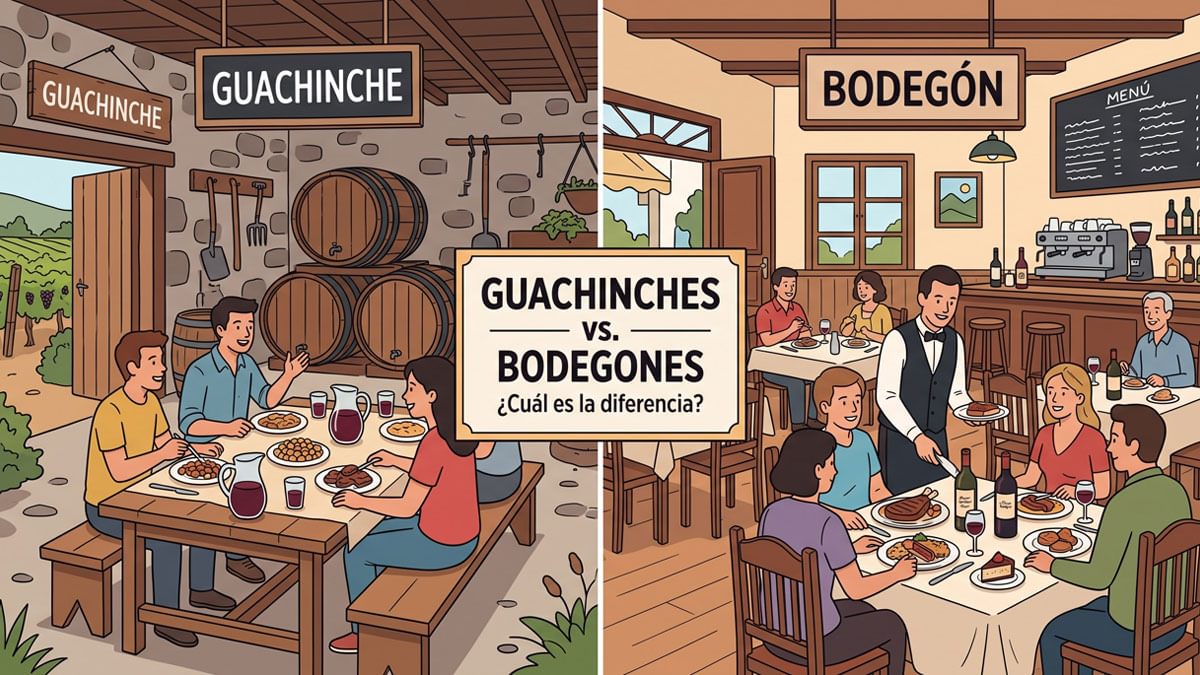
If you are in Tenerife (or planning to visit the island) and want to enjoy the authentic local cuisine, you have probably come across two terms that are often used interchangeably: Guachinche and Bodegón .
Although both are temples of Canarian cuisine and fine wine, the reality is that they are completely different concepts, both in their origins and legally. To avoid being ripped off on your next culinary tour, we’ll explain their key differences.
What is an authentic Guachinche?
The guachinche didn’t originate as a restaurant, but as a direct sales channel for wine . Historically, winegrowers in northern Tenerife (especially in areas like La Victoria, La Matanza, Santa Úrsula, and La Orotava) opened the doors of their garages, patios, or tool sheds to sell the surplus wine from their latest harvest.
To accompany the wine, the family would prepare some homemade tapas. Today, to protect this tradition, authentic guachinches are regulated by law and must comply with strict rules.
- Homegrown wine: This is the main requirement. They can only sell wine that they themselves produce.
- Seasonality: They are not open all year round. They can only open for a maximum of 4 months a year, or until they run out of wine from the harvest.
- Very limited menu: Regulations allow them to offer a maximum of 3 or 4 different dishes, usually traditional family recipes (chickpeas, stewed meat, fried eggs, ribs with potatoes). They do not offer commercially prepared desserts or coffee.
- Improvised facilities: Folding or rustic wooden tables, paper tablecloths and a bustling atmosphere inside farms, garages or home cellars.
What is a still life?
A bodegón is a professional restaurant specializing in Canarian cuisine and meats. Although many try to imitate the rustic charm of guachinches (using barrels, agricultural tools on the walls, and wood), they operate like any other restaurant.
- Open all year round: They have stable business hours and professional employees.
- Extensive menu: You can find dozens of starters, salads, grilled meat cuts, fish, a wide variety of homemade desserts and, of course, coffee and liqueurs.
- Wine list: Although they usually have “house wine” (bought in bulk from wineries on the island), they also offer wine lists with bottled wines from different designations of origin, beers and soft drinks of all kinds.
- Comfort: They usually have more formal facilities, better acoustics, air conditioning and, in many cases, large dining rooms prepared for large celebrations.
Summary of Key Differences
To make it clear at a glance, here are the differences side by side:
| Feature | Authentic Guachinche | Canary Still Life |
| Opening | Temporary (until the wine runs out) | All year |
| Came | Exclusively from our own harvest | House wine and multiple commercial brands |
| Meal | Very limited menu (3-4 homemade dishes) | Extensive menu (meats, starters, fish) |
| Desserts and Coffee | They usually don’t have (or have very basic) | Wide variety of desserts and coffee |
| Atmosphere | Garages, patios, rural properties | Commercial premises for restaurants |
Which one should you choose?
There isn’t one that’s better than the other; it all depends on the experience you’re looking for.
Choose a guachinche if… you’re looking for the purest and most traditional experience. If you care more about trying the new local wine, don’t mind sitting on a plastic chair, and want to pay a very reasonable price for 100% homemade dishes in a lively atmosphere.
Choose a traditional Argentine restaurant if… you are with a large group with varied tastes, you want to ensure you eat top-quality grilled meat, you need easy parking, you want to linger over coffee and dessert, or you simply prefer a more comfortable and professional environment.